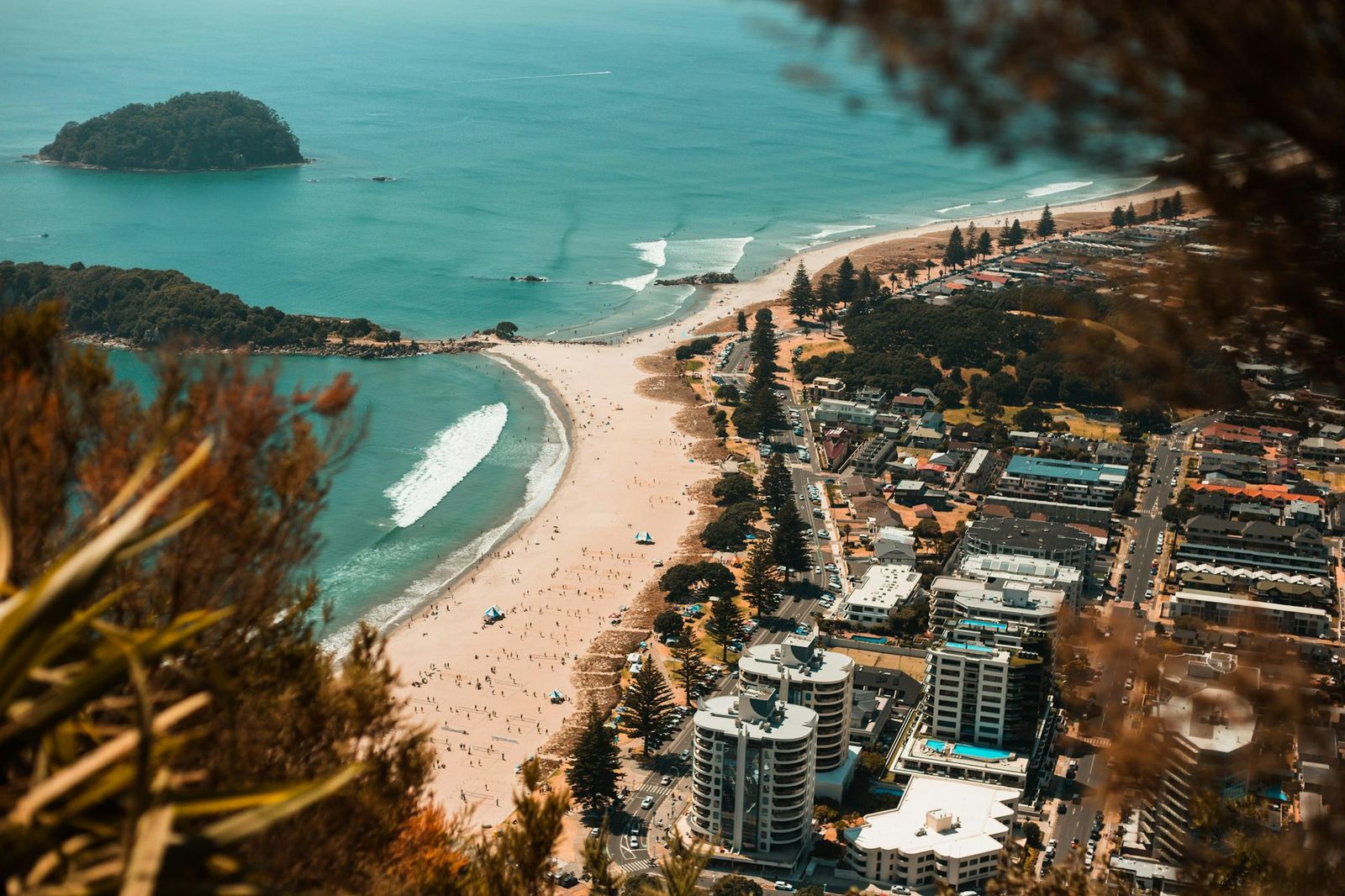
Why is the Bay of Plenty economy growing?
The Bay of Plenty has become one of New Zealand’s growth stories. ANZ’s July 2026 Bay of Plenty spotlight described the region as “one of New Zealand’s great economic success stories”, reporting regional exports of $7.56 billion in 2025, up 16.9% in a year. Around 80% of the country’s kiwifruit is grown here, and Port of Tauranga, the country’s largest port by volume, handles nearly half of New Zealand’s containerised exports.
The region’s business base has expanded with it. ANZ counted 43,146 registered businesses in the Bay of Plenty in 2025, and Tauranga’s population reached 161,000, double its 1996 level, with the city expected to become New Zealand’s fourth largest. Infometrics’ quarterly monitors through 2026 consistently placed the Bay of Plenty among the North Island’s faster-growing economies.
How do Bay of Plenty SMEs use finance?
Horticulture’s long cycle. Kiwifruit and avocado businesses spend money for months before fruit is sold. Orchard management companies, contractors and packhouse suppliers pay wages, fuel and materials through winter pruning and spring work, then wait for harvest and export payments. Seasonal facilities and working capital fill the gap.
Following population growth. New subdivisions in Papamoa East, Te Puke and the western Bay create demand for childcare, medical, trade supply and hospitality businesses. Established operators open second sites with expansion finance.
Buying in. The Bay attracts people relocating for lifestyle. Many prefer to buy an established business with customers and staff rather than start from scratch. Acquisition funding, often secured on a home, is common.
Port-linked logistics. Freight forwarders, transport operators and cool-store businesses serving the port carry high operating costs and customers on account. Fuel price rises since the Middle East conflict have widened that gap.
Risks Bay of Plenty owners should plan for
- Concentration in one crop. Businesses heavily tied to kiwifruit should consider how a weaker season or a biosecurity event would affect cash flow.
- Construction cycles. BNZ’s February 2026 analysis noted that Bay of Plenty residential consents fell during 2025, so builders and suppliers should plan for uneven work.
- Staff costs. Rapid growth competes for skilled labour. Factor wage pressure into contract pricing and expansion forecasts.
Working with us in the Bay
From Katikati to Ōpōtiki, the process runs by phone and online. Complete a 60-second enquiry and a lending specialist will call. Property-secured loans can use a home, rental, commercial property or land, even with an existing mortgage, and no financials are needed for the initial assessment. Every loan is priced on the individual business and its situation.
How Tauranga SMEs typically use finance
| Purpose | Why it comes up here |
|---|---|
| Seasonal stock builds | Orchard contractors, packhouses and post-harvest suppliers carry heavy costs from winter pruning to harvest. |
| Expansion & new sites | Service businesses follow Tauranga's population growth into Papamoa, Te Puke and the western Bay. |
| Buying a business | Lifestyle-driven relocation to the Bay brings buyers for established trade and service businesses. |
| Contracts & tenders | Construction and engineering firms take on residential, port-related and infrastructure work. |
| Working capital | Freight and logistics operators carry fuel and labour costs while customers pay on account. |
Tauranga & Bay of Plenty: common questions
Do you lend to kiwifruit contractors and orchard service businesses?
Yes. Contractors, packhouse suppliers and other horticultural service businesses commonly use working capital or seasonal facilities. Lending is for business purposes only.
Can I use a Mount Maunganui or Papamoa property as security?
Yes. Homes, rentals, commercial property and land anywhere in New Zealand can secure a business loan as a first or second mortgage.
My Tauranga business is growing fast. Is unsecured funding an option?
If you have been trading six months or more, unsecured facilities based on turnover and bank statements may suit, with decisions sometimes made the same day.